GamesLab history

The beginnings of the GamesLab date back to 2008, when professor Dr Jörg Müller-Lietzkow started seminars on the development of game projects - at that time without a dedicated room or hardware. On 10 July 2010, the GamesLab at Paderborn University was officially opened as a place for the development and research of video games, equipped with industry-standard hardware. Professor Dr Jörg Müller-Lietzkow's leadership continued for many years until he left Paderborn University. Dr Christian Fuchs has been the scientific director of the GamesLab since 1 April 2022.
In the history of the GamesLab, not only have many game projects been created, but there have also been several collaborations with game studios. In addition, many former participants now work in the games industry. In the future, the GamesLab will continue to deal with game development in the field of teaching and realise many game projects.
Milestones
(Re)opening of the GamesLab and VRLab at UPB
On Wed, 8 October 2025, the GamesLab and VRLab UPB celebrated the (re)opening of the labs together with ZIM, the Institute for Media Studies and guests from Paderborn University, politics, innovation, the cultural and media landscape from OWL, NRW and the German games industry.
The organisers provided insights into the interdisziplinär work and commitment of the students, a tour of the labs and keynotes from research with Dr. Enes Yigitbas and the industry with freelancer and illustrator Lars Weiler.
The remodelling 2024 - 2025
At the end of March 2024, UPB took part in the call for proposals for the funding programme for space optimisation and investments in technical infrastructure for teaching purposes with funds from the Ministry of Culture and Science's (MKW) "Strengthening studies and teaching" (2024) future contract.
Thanks to the funding approval on 17 July 2024, the GamesLab was able to plan a comprehensive renewal of the equipment as well as quality improvements for students and teaching. New hardware (including PCs, graphics tablets, audio interfaces and microphones, screens, virtual reality hardware, etc.) was procured from 12 September 2024.
In November, the premises were completely cleared out in order to be equipped with new furniture, but at the same time normal course operations had to be maintained. From February 2025, the new hardware could then be installed and the remaining furniture and acoustic elements put in place to improve the quality of work and space. All with one goal - to make the GamesLab even more of a place for collaborative learning, creative work and a cultural and social "third space".
Firm roots
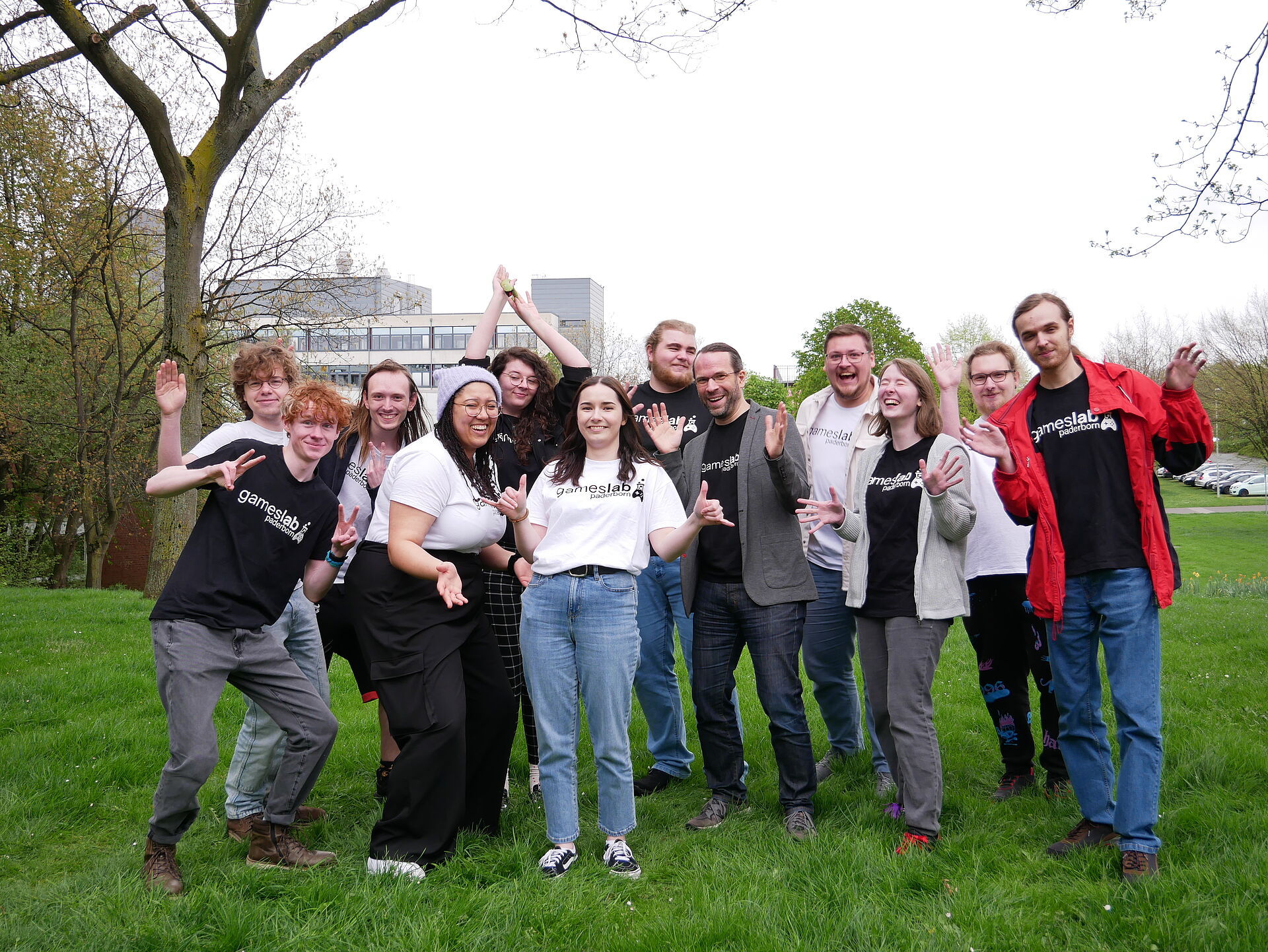
In the summer semester 2024, the organisation successfully completed three semester projects together with around 70 students. Three sophisticated game prototypes were developed between April and July.
Our first virtual reality (VR) game "Stranded Station" with a time loop, the socio-critical yet hopeful Metroidvania "Melody of the Tits" (2D adventure) and the Lovecraft horror game with complex worldbuilding "Calls of the Polar Night" (3D puzzle).
New structures
The organisation completely redesigns and restructures the main seminar during the lecture-free period and runs the seminar "Project management in the computer and video game industry" with 120 students in the winter semester 2023/24. In January 2024, around 90 students successfully develop in the final GameJam and together the cohort can present seven GameJam game prototypes.
Return to university
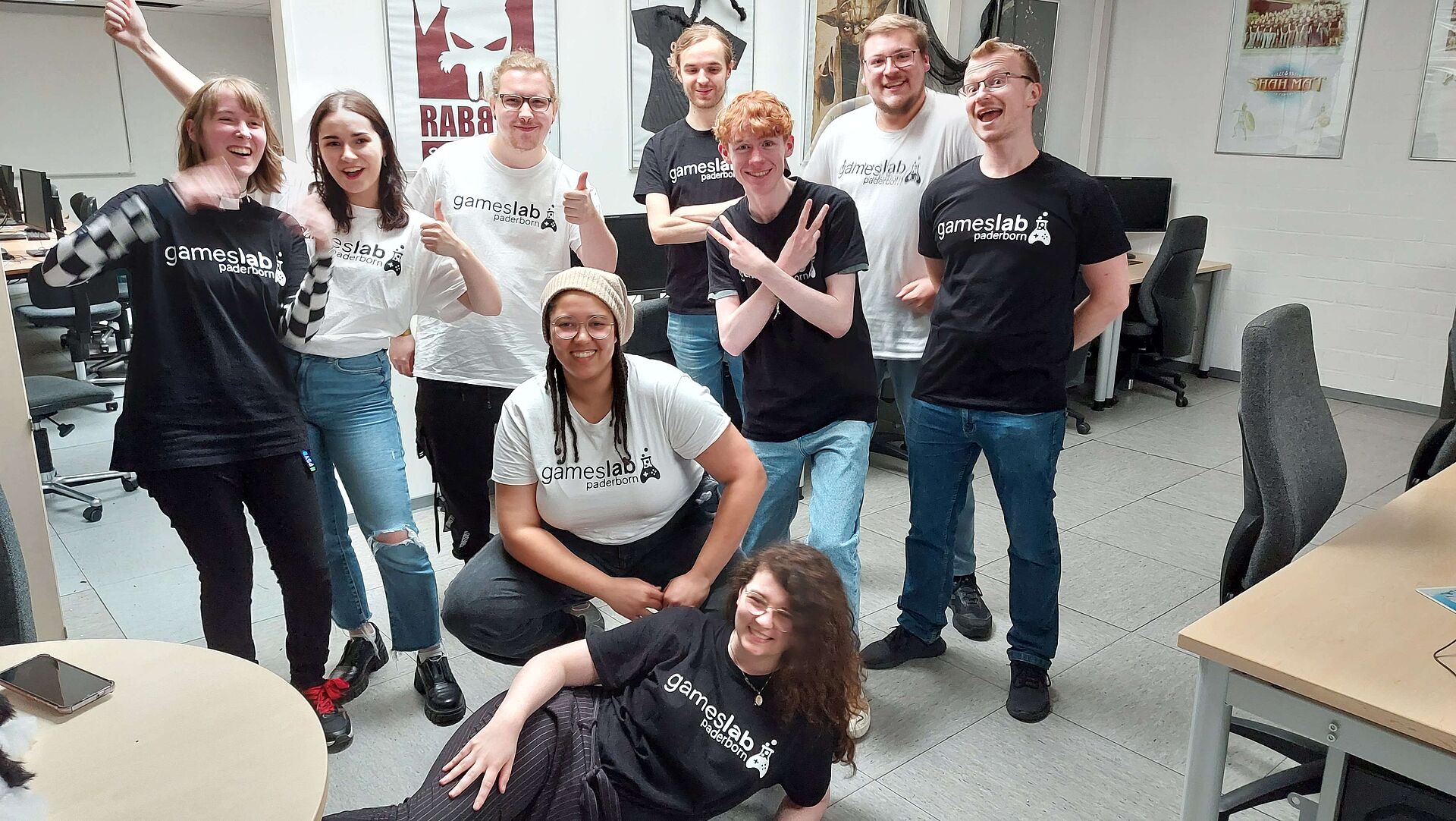
With the summer semester 2022 as the last coronavirus semester, students are slowly returning to the university. Attendance at face-to-face events is increasing. And we have also slowly expanded our organisation team again, got new students interested in the GamesLab organisation and were able to hold our first GameJam on site.
COVID-19 and remote semester
During the coronavirus pandemic, the GamesLab has also had to overcome a number of hurdles. With predominantly online teaching, the GamesLab has become increasingly quiet as a shared social place of learning. Our seminar continued to be offered online.
Spin-off and game publication
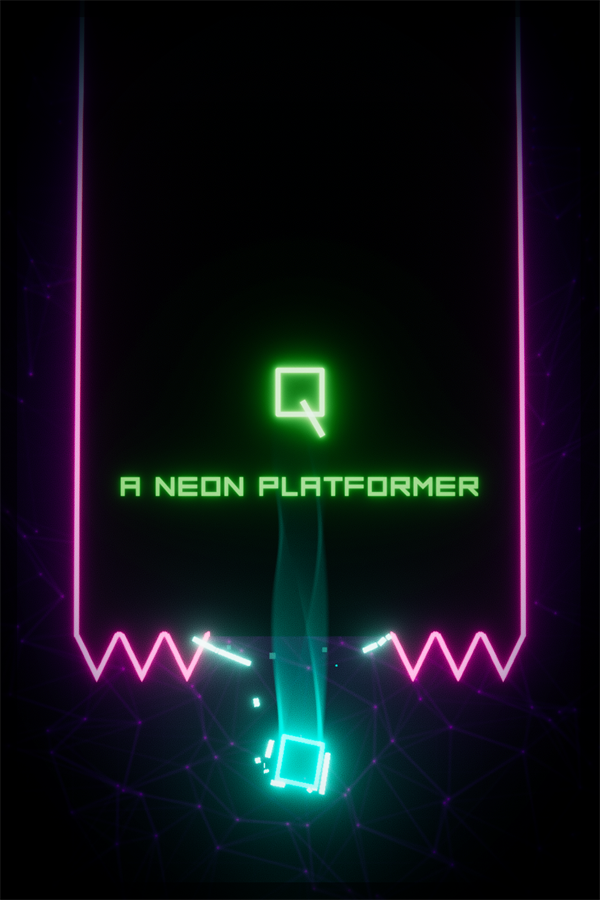
A team of friends and developers emerged from the former organisation to form the indie studio "Manatea Entertainment". Their first game released for PC, "Q", is available on Steam.
Opening of the Gameslab
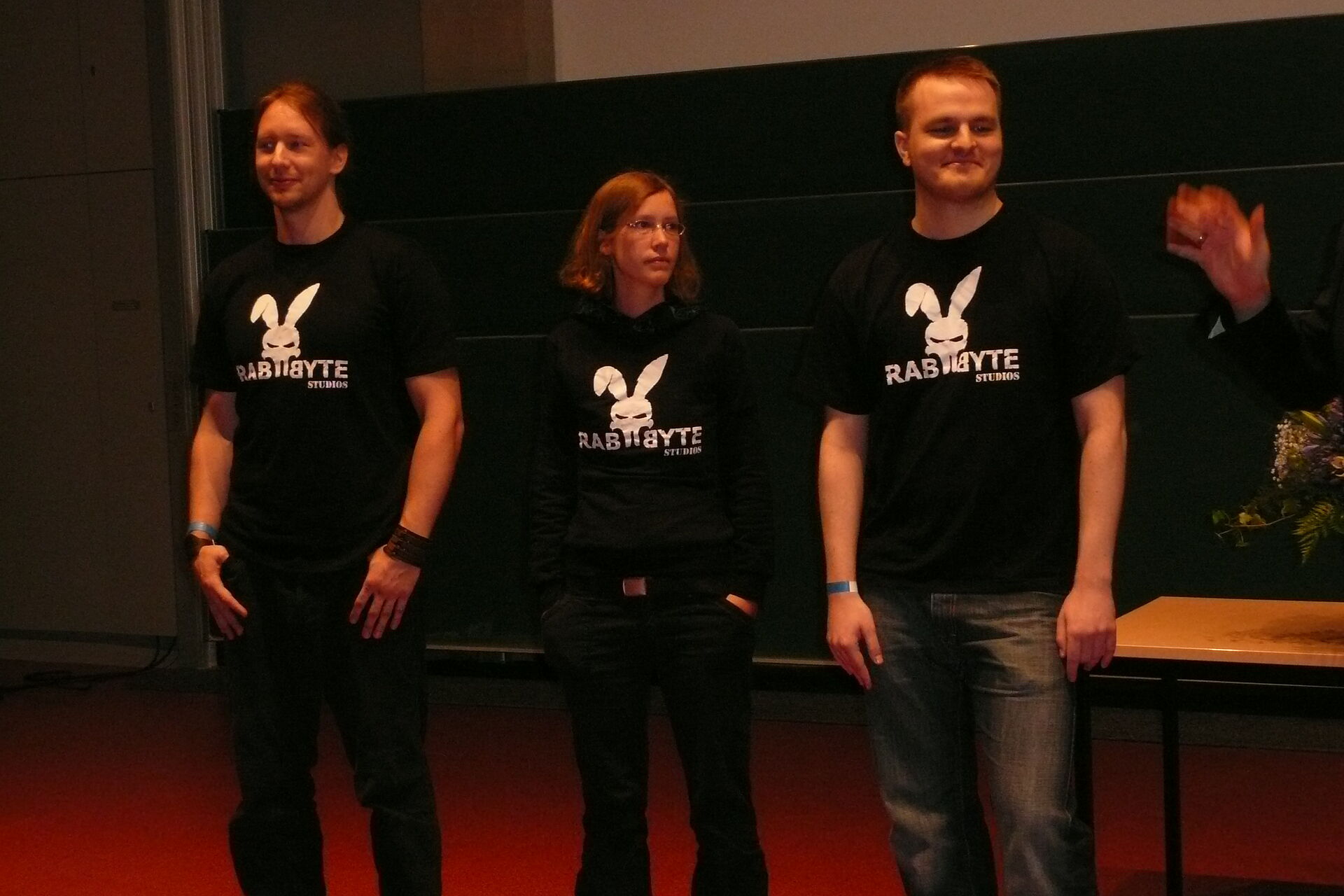
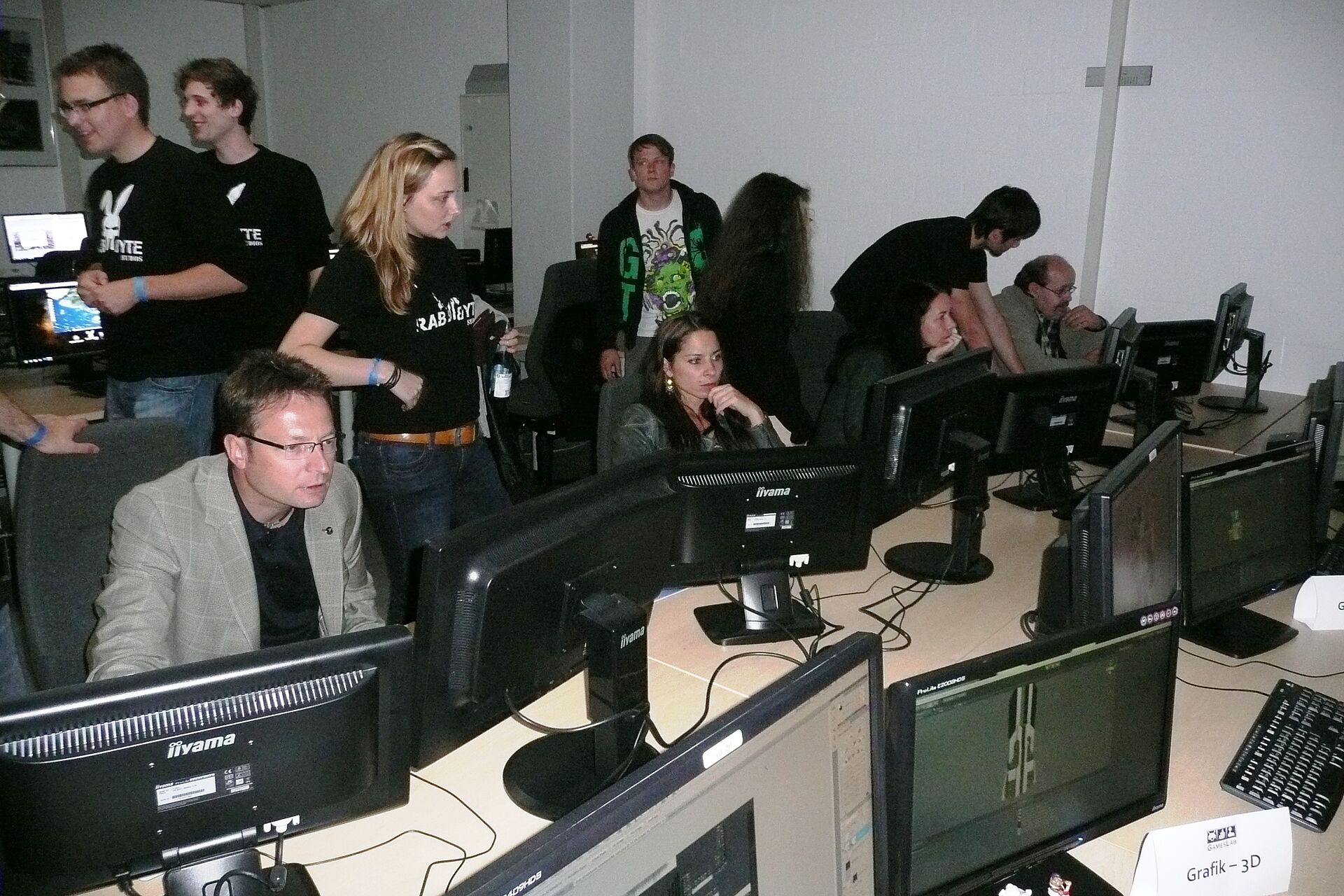
The Gameslab was officially opened on 04.07.2011. We welcomed many friends and guests from politics, business and faraway countries.
Our beginnings
The first seminar, which centred on "Project management in the computer and video games industry", took place in 2008. Without our own premises and without much equipment, it was nevertheless clear that "these media and their subject areas are important, so we want to deal with them".
Christian Fuchs: New Professor of Media Systems and Media Organisation and Scientific Director of the GamesLab

Christian Fuchs has been Professor of Media Systems and Media Organisation at Paderborn University's Institute of Media Studies and Scientific Director of the GamesLab since 1 April 2022. Together with the technical director of the GamesLab, Volker Spaarmann, and the GamesLab organisation team, he manages the work in the GamesLab. Fuchs also supervises the classes organised in the GamesLab.
Professor Fuchs says about the GamesLab: "The GamesLab is an impressive project in which students learn in a self-organised way, work together transdisciplinarily across the boundaries of individual study programmes, develop creative computer games, engage in research into computer games and gain experience in project work and cooperative work. I am delighted to be the scientific director of the GamesLab and to supervise the associated teaching.
Fuchs has interdisziplinär and international research and teaching experience. He holds a diploma and doctorate in Computer Science with a specialisation in Computer Science and Society from TU Wien, completed his habilitation in Information and Communication Technologies & Society at the University of Salzburg in 2008 and was a professor of Media and Communication Science in Sweden and the UK before being appointed to Paderborn University in 2022. His research interests include media, business & society and digital media & society.
The history of the GamesLab in pictures